How to follow VALORANT Champions Shanghai group stage like a pro analyst
Want articles like this for your own video to promote it on YouTube and Google? Order them through the Telegram bot @sat_sit_bot. Articles with your video embedded are written and posted by the bot itself — on popular topical sites (no ads). Free trial — 50 articles.
· based on the channel VALORANT Champions Tour
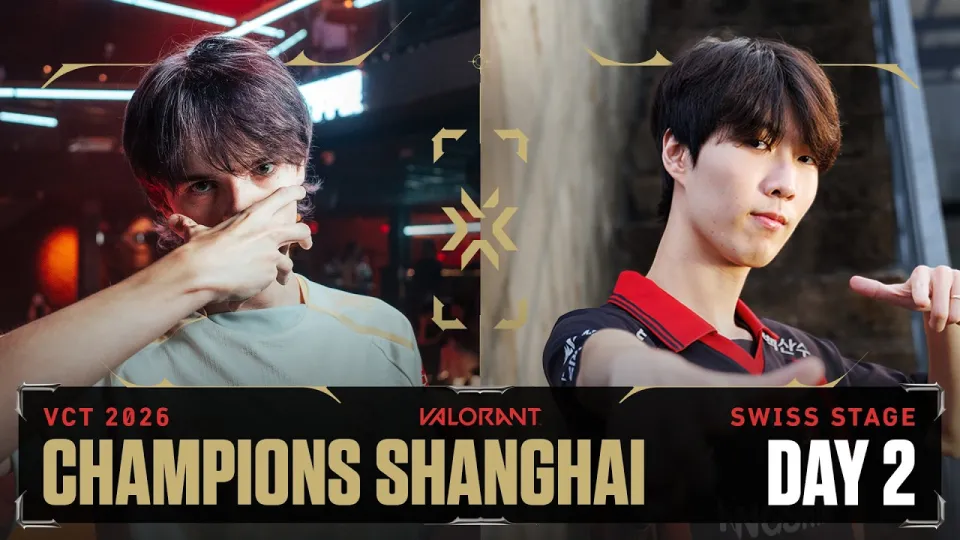
Following VALORANT Champions Shanghai properly means treating the group stage as a data set, not background noise: track the 16-team field across Americas, CN, EMEA and Pacific, note which squads already won a Masters title in 2026, and use the official channels at VALORANT Esports on X for schedules, results and bracket updates. Day 2 of the Group Stage, published by the VALORANT Champions Tour on 25.09.2026, is the cleanest sample of how the new challenger generation stacks up against the established names.
What the VALORANT Champions Shanghai group stage actually decides
The group stage exists to cut sixteen teams down to a playoff bracket while sorting seeding, and it does that through short, high-variance series where one bad map can end a season. Shanghai runs from September 24 to October 18, and the event is framed as the moment the 2026 season's shifting hierarchy gets settled: familiar rosters, new contenders, and a fearless wave of challengers all chasing the biggest trophy of the year. Because two Masters events in 2026 already crowned new champions, the group stage carries extra weight — teams that looked dominant in the spring are no longer automatically favored, and a single group loss can flip an entire bracket path.
How to read a Day 2 VOD without spoiling yourself
A full broadcast day is a long watch, and the practical approach is to decide in advance what you are extracting from it. The most-liked comment under the Day 2 upload is literally a spoiler blocker with timestamps tucked into replies, which tells you the audience treats these VODs as something to be navigated, not passively consumed.
- Set a target: pick two or three teams you actually care about and watch only their maps live, then skim the rest.
- Use the chapter markers and the community timestamp replies as a table of contents instead of scrubbing blindly.
- Watch the pistol rounds and the first buy round of each half first — they set the economy story for everything after.
- Go back for full halves only when a map went to overtime or a team reversed a big deficit.
- Keep the official channels open in a second tab for the current standings, because a VOD never tells you how the group table looks after the day ends.
Why the CN region argument keeps resurfacing under every VOD
China's four slots at international events are the single most contested structural topic in the comments, and the criticism is blunt: some viewers argue the slots are wasted, that the region should be merged into Pacific, and that the gap between CN representatives and the top Pacific or EMEA squads is visible in map scores. Others point to the crowd factor, noting how a home audience can make a lopsided series awkward for the winning team. There is a counter-argument worth keeping in mind: a region's depth is measured over seasons, not over one group stage, and CN teams have historically been given a separate circuit precisely to build that depth domestically. Neither side is settled by one broadcast day, but the debate is a real part of how this event is received.
The skill-gap complaints and what they usually mean
When viewers describe matches as "five Radiants versus five Bronzes," they are almost always reacting to one specific thing: a team losing structure in mid-round, taking fights without utility, or burning ultimates for no trade value. In the Day 2 thread, one commenter points at a round where a team's in-game comms were shown and argues they were worse than ranked-level communication. That is a harsh read, but it points at a genuine analytical lens — at Champions level, the difference between a 13-8 loss and a 13-11 loss is usually communication discipline, not aim. Watch how a team calls a retake, whether they stack utility or stagger it, and whether the in-game leader's plan survives first contact. That is where the gap actually shows up.
Pick'ems, upsets and the cost of a speedrun day
One comment under the Day 2 VOD calls it a speedrun day, and that is the signature of a group stage where one region's teams fall quickly and the rest of the slate compresses. For Pick'ems players, this is the trap: picking a region to lose outright can look easy in hindsight and disastrous in advance, because a single upset in a short series format invalidates an entire bracket. The safer approach is to weight recent Masters results, map pool depth, and whether a team has shown it can win on both attack and defense sides. A roster that only wins on one side of the map will eventually meet a team that punishes exactly that.
Production details viewers actually notice
Broadcast translation is a recurring frustration: interviews get subtitled or interpreted in a way that stretches a short answer into a long segment, and some viewers find it disruptive to pacing. It is worth separating that from the content itself — post-match interviews at Champions are where coaches and players explain adjustments, and the translated answers often contain the only public explanation of why a map went the way it did. If pacing bothers you, watch the interview segments separately from the maps. The rest of the production package — observer work, replay angles, the analyst desk — is what makes a long group stage day watchable at all.
Useful links
- Official VALORANT Esports updates on X: https://x.com/valorantesports
- Facebook: https://www.facebook.com/ValorantEsports/
- Instagram: https://www.instagram.com/valorantesports/
- TikTok: https://www.tiktok.com/@valorantesports
- Live broadcasts on Twitch: https://www.twitch.tv/valorant
Closing thoughts on the Shanghai group stage
The group stage in Shanghai is where the 2026 season's story gets its shape: sixteen teams, four regions, and a bracket that will not forgive a slow start. Treat the Day 2 VOD as a scouting tool rather than a highlight reel, and the format arguments, the skill-gap complaints and the Pick'ems chaos all start to make sense as symptoms of a genuinely competitive field. For schedules, standings and the rest of the broadcast, follow VALORANT Esports on X, and credit for the full Day 2 broadcast goes to the VALORANT Champions Tour channel, which produced and published the stream.
Key takeaways
- VALORANT Champions Shanghai runs September 24 to October 18, with 16 teams from Americas, CN, EMEA and Pacific.
- Group Stage Day 2 streamed on the VALORANT Champions Tour channel as a full VOD with a spoiler-blocked timestamp comment.
- Two Masters events in 2026 already produced new champions, so Shanghai decides the year's biggest trophy.
- Partners backing the 2026 season include AWS, Coinbase, HyperX, Mastercard, Red Bull, Secretlab and Verizon.
- China holds four of the sixteen slots, a format point that dominates community debate under the VOD.
Questions & answers
How many teams play at VALORANT Champions Shanghai and where do they come from?
Sixteen teams qualify for the event, drawn from four regions: Americas, CN, EMEA and Pacific. The tournament runs from September 24 to October 18 and is positioned as the final decider of the 2026 season, after two Masters events that both produced new champions.
Why do viewers complain about China having its own region and four slots?
The criticism is that CN representatives have looked outmatched in some international series, so those slots could arguably go to deeper Pacific or EMEA teams. The counter-argument is that a separate circuit is how a region builds long-term depth, and one group stage day is not enough evidence either way.
What does it mean when people call a group stage day a speedrun?
It usually means several series ended quickly and lopsidedly, so the broadcast day compressed into a short, one-sided slate. For Pick'ems players this is dangerous, because an easy-looking region pick can collapse the moment one short series goes the other way.
Is it worth watching the full Day 2 VOD or just the highlights?
For casual viewing, highlights are enough. If you want to understand why teams win or lose, watch pistol rounds, first buy rounds and any map that went to overtime, and use the community timestamp replies as a table of contents instead of scrubbing through the whole broadcast.
Source: VALORANT Champions Shanghai — Group Stage — Day 2 · Markdown version